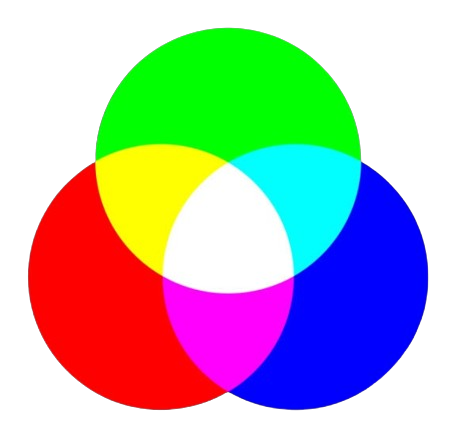
The Samoiloff effect, made visible.
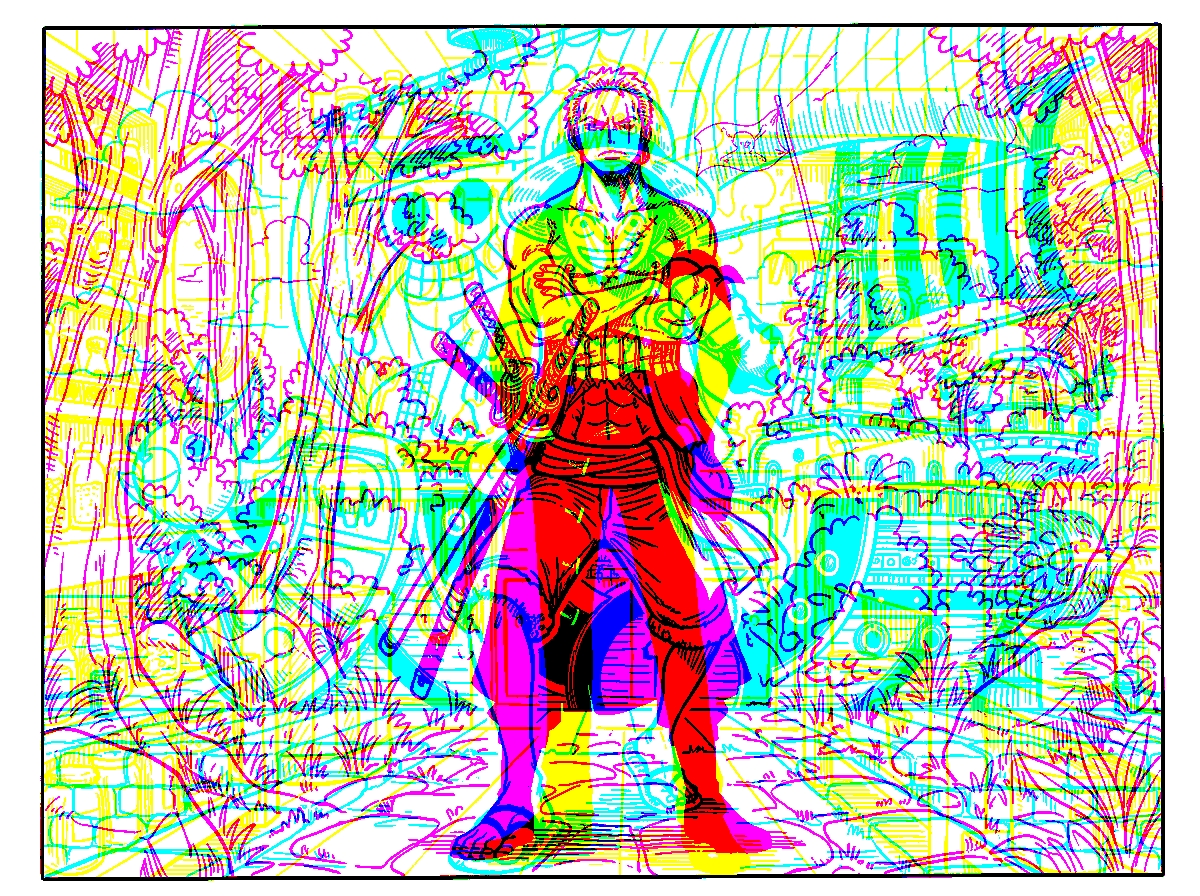
Living RGB prints use layered cyan, magenta, and yellow artwork to create an image that looks dense in white light, then separates under red, green, or blue illumination. Try it below: red reveals Luffy, green reveals Zoro, blue reveals Sanji.
Choose red, green, or blue light, then move your pointer over the artwork. The coloured light follows the cursor and reveals Luffy inside the circle.
The art-history reference
The best-known contemporary reference for this visual language is Carnovsky, the Milan-based duo Francesco Rugi and Silvia Quintanilla, whose ongoing RGB project turns dense layered drawings into separate scenes through colored light.
Living RGB credits that lineage while describing the broader optical method in plain language: light-reactive RGB art, built from layered drawings and color filtering.
The canvas: CMY layers
A finished image begins with three separate black-and-white drawings. Each drawing is assigned to one subtractive ink color: cyan, magenta, or yellow. Under ordinary white light, the layers overlap into a bright but chaotic composition.
That visual tangle is intentional. It keeps the hidden drawings in the same physical space, ready to be separated by the color of the light that hits them.
The reveal: RGB filtering
The Samoiloff effect describes the perceptual trick: colored illumination or transparent filters suppress some ink colors while making their opposite layer stand out. Red, green, and blue light act like three different keys for one printed image.
That is why a light-reactive print feels alive. The artwork does not change, but the viewing condition does, and your eye receives a different drawing each time.